

What are the Religions in Wallis and Futuna?
Wallis and Futuna is a deeply religious community, with Catholicism at the heart of daily life. Introduced by Marist missionaries in the 1840s, the faith has shaped the islands’ culture, social structure and local leadership ever since.
Religion influences many aspects of life, from observing Sunday as a day of worship to the important role of the church in community gatherings and support networks.
Visitors can gain meaningful cultural insight by attending a church service or experiencing local festivals, such as the katoaga that takes place during National and Territorial Days, which combine spiritual observance, such as a church mass, with traditional customs.
Learn more about religion and cultural practices in Wallis and Futuna in the guide below.
This article is based on real on-the-ground research, not on AI scraping old content from the internet. Learn how we use AI!
Table of Contents
A (Quick) History of the Religions in Wallis and Futuna
Christianity was introduced to Wallis and Futuna in the late 1830s by French Marist missionaries, most notably Jean-Baptiste François Pompallier, Pierre Bataillon and Pierre-Louis-Marie Chanel. The first missions were established in 1837, with Bataillon settling in Wallis and Chanel in Futuna, marking the beginning of a rapid and lasting transformation of the islands.
One of the most defining moments came in 1841, when Pierre Chanel was killed on Futuna. His growing influence, particularly after converting the king’s son, was seen as a threat to traditional authority, leading to his assassination by a local warrior.
Rather than stopping the spread of Christianity, this event had the opposite effect. Within a year, many Futunans converted, and even the man responsible for Chanel’s death later embraced Christianity and asked to be buried near the church as an act of repentance.
On Wallis, conversion was more gradual but equally transformative. Chiefs and eventually the king were baptised, and Catholicism quickly became embedded in the political structure of the islands. Missionaries like Bataillon played a key role not only in religion but also in shaping local governance, helping to formalise laws and the structure of the chieftain system.
Over time, nearly the entire population converted, making Wallis and Futuna one of the most uniformly Catholic societies in the world.
Other religions, including small Protestant groups and the Baháʼí Faith, exist but remain a very small minority compared to the dominant Catholic presence.
-%20BNCC%20CREDIT%20WallisandFutunaPocketGuide.com-900x601.webp?v=2026-04-07T00%3A33%3A48.738Z)
Christianity in Wallis and Futuna
Christianity is the overwhelmingly dominant religion in Wallis and Futuna, with nearly the entire population identifying as Catholic. Religion plays a central role in daily life, with Sundays widely observed as a sacred day of worship and rest, and religious practices closely intertwined with local customs.
Where to Experience Christianity in Wallis and Futuna as a Tourist
Visitors are welcome to attend Sunday church services in villages across Wallis and Futuna.
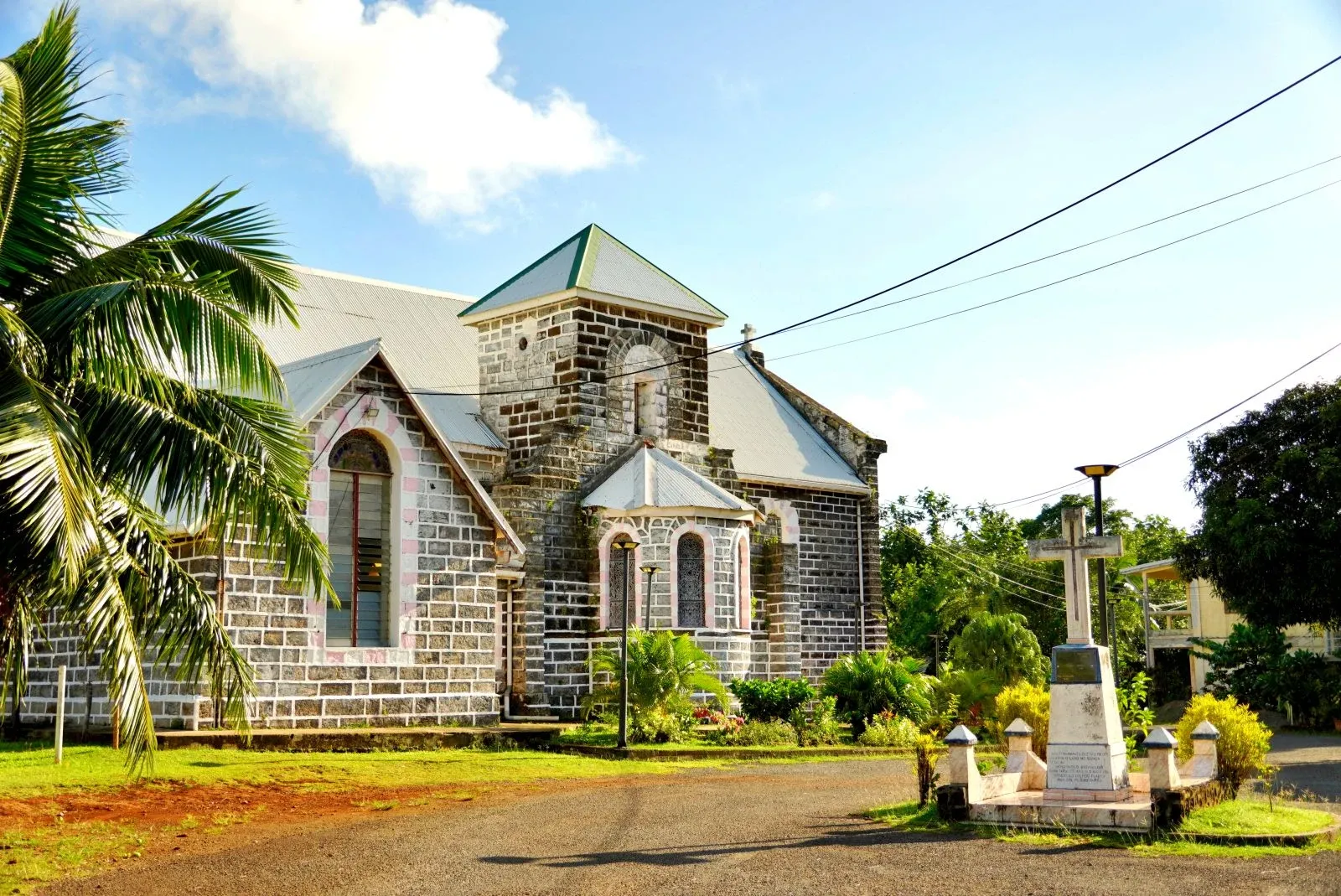
Churches often serve as community hubs, and attending a service provides an authentic glimpse into local culture, from the melodic a cappella hymns to the traditional attire worn by parishioners.
-SE%20CREDIT%20WallisandFutunaPocketGuide.com.webp?v=2026-04-07T01%3A13%3A05.909Z)
The Saint Pierre Chanel Basilica in Poï (Futuna) and the Cathedral of Our Lady of the Assumption in Mata'Utu (Wallis) are among the most prominent churches and are notable for their striking architecture and cultural significance.
Visitors should dress respectfully when attending services, covering their knees, and generally wearing modest attire. See more tips in the 10 Best Churches in Wallis & Futuna to Experience as a Visitor.
Many public holidays and local celebrations are linked to Christianity, even village fêtes which take place on the day of their church's affiliated saint, while Christmas and Easter are observed with community-wide festivities and ceremonies, which you can learn more about in our guide to Public Holidays in Wallis & Futuna (& Other Important Dates).
Christian Denominations Represented in Wallis and Futuna
The vast majority of the population identifies as Christian, almost entirely Catholic. Less than 1% of the population below to other Christian denominations, such as Jehovah's Witnesses, Seventh-day Adventists and the Assembly of God.
Smaller groups follow ethnic religions, the Baháʼí Faith, or are non-religious, but these represent a very minor segment of the population.
The Diocese of Wallis and Futuna governs Catholic activity on the islands, with the Cathédrale Notre-Dame-de-l'Assomption de Mata'Utu and the Saint Pierre Chanel Basilica in Poï serving as central places of worship.
The church also plays an important social and political role in the community, with religious ceremonies (katoaga) closely linked to customary ceremonies and local leadership.
-IC%26C%20CREDIT%20WallisandFutunaPocketGuide.com.webp?v=2026-04-07T01%3A00%3A07.937Z)
Frequently Asked Questions About Religion in Wallis and Futuna
Now that you know about the religious landscape in Wallis and Futuna, here are the answers to the internet's frequently asked questions about religion and spiritual practices in this French Pacific territory!
What is the main religion in Wallis and Futuna?
Roman Catholicism is the predominant religion in Wallis and Futuna, with approximately 99% of the population identifying as Catholic. The islands were evangelised by French Catholic missionaries in the 19th century, and the faith remains deeply embedded in daily life and cultural practices.
Are there any Protestant churches in Wallis and Futuna?
While Roman Catholicism dominates, there are small Protestant communities in Wallis and Futuna, primarily consisting of Jehovah's Witnesses, Seventh-day Adventists and Assembly of God congregations. These communities represent less than 1% of the population but maintain active worship services.
How important is religion in daily life in Wallis and Futuna?
Religion plays a central role in daily life in Wallis and Futuna, influencing everything from family structure to community decisions. Sunday Mass attendance is extremely high, and religious festivals are major community events. Traditional Polynesian customs have also been integrated with Catholic practices, creating a unique spiritual culture.
What are the main religious festivals celebrated in Wallis and Futuna?
The most important religious celebrations include Easter, Christmas, the Feast of the Assumption (15th August), and various saints' days throughout the year. Each village typically has its own patron saint, and these celebrations often combine Catholic liturgy with traditional Polynesian feasting and dancing.
Learn more about these festivities in the 10 Biggest Events & Festivals in Wallis & Futuna.
Can tourists visit churches in Wallis and Futuna?
Yes, tourists are welcome to visit churches in Wallis and Futuna, though visitors should dress respectfully and be mindful that these are active places of worship. The cathedral in Mata'Utu on Wallis and several historic churches on both islands are particularly noteworthy for their architecture and cultural significance.
See the 10 Best Churches in Wallis & Futuna to Experience as a Visitor for inspiration.
Editor's Choice
Tautai
Embark on an unforgettable full-day photography boat tour around Futuna's stunning coastline with us. Departing at 7am, we'll glide past historic villages, sacred chapels, and dramatic natural...
More About Religion in Wallis and Futuna
That's it for our guide to the religions in Wallis and Futuna. To learn more about the culture of Wallis and Futuna, check out our other guides:
- A Traveller's Guide to the Wallis & Futuna Culture
- Wallisian & Futunan Etiquette: Wallis & Futuna Customs & Traditions
- 10 Best Cultural Activities in Wallis & Futuna
Finally, get the full picture of planning a trip to Wallis and Futuna using The Complete Travel Guide to Wallis & Futuna.

-BI%20CREDIT%20WallisandFutunaPocketGuide.com-900x601.webp?v=2026-05-20T02%3A42%3A42.396Z)
-SEB%20CREDIT%20WallisandFutunaPocketGuide.com-900x601.webp?v=2026-04-07T00%3A26%3A06.322Z)