

-SEB%20CREDIT%20WallisandFutunaPocketGuide.com.webp?v=2026-04-21T23%3A56%3A05.956Z)
The Famous Locations in Wallis and Futuna
What are the most famous places in Wallis and Futuna? It might be a tall order to come up with 10 places that are famous in Wallis and Futuna for a place that most of the world's population doesn't know exists (we're making an educated guess here).
Regardless, from the most popular tourist attractions to pilgrimage sights, we go through the top famous locations of Wallis and Futuna right here!
This article is based on real on-the-ground research, not on AI scraping old content from the internet. Learn how we use AI!
Table of Contents
1.Lake Lalolalo (Wallis)
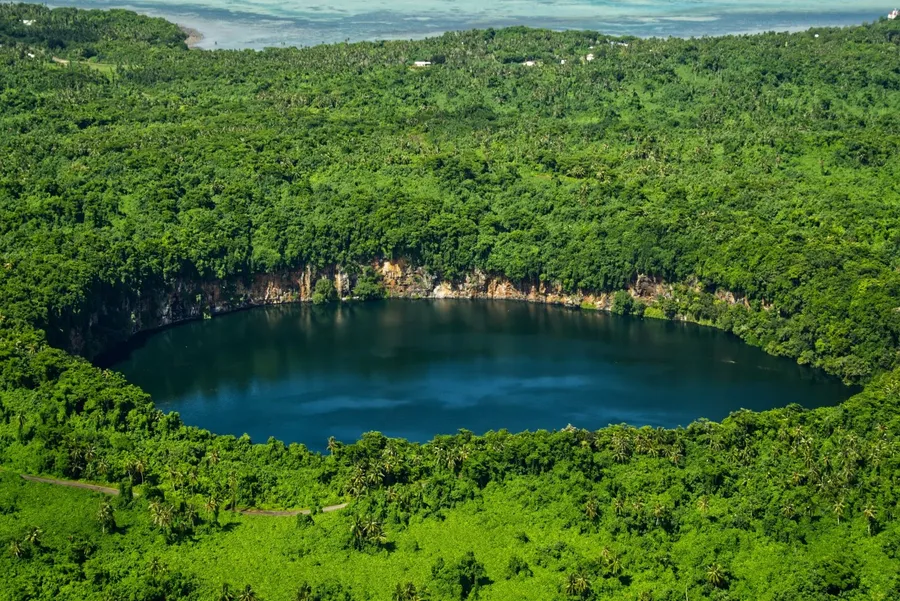
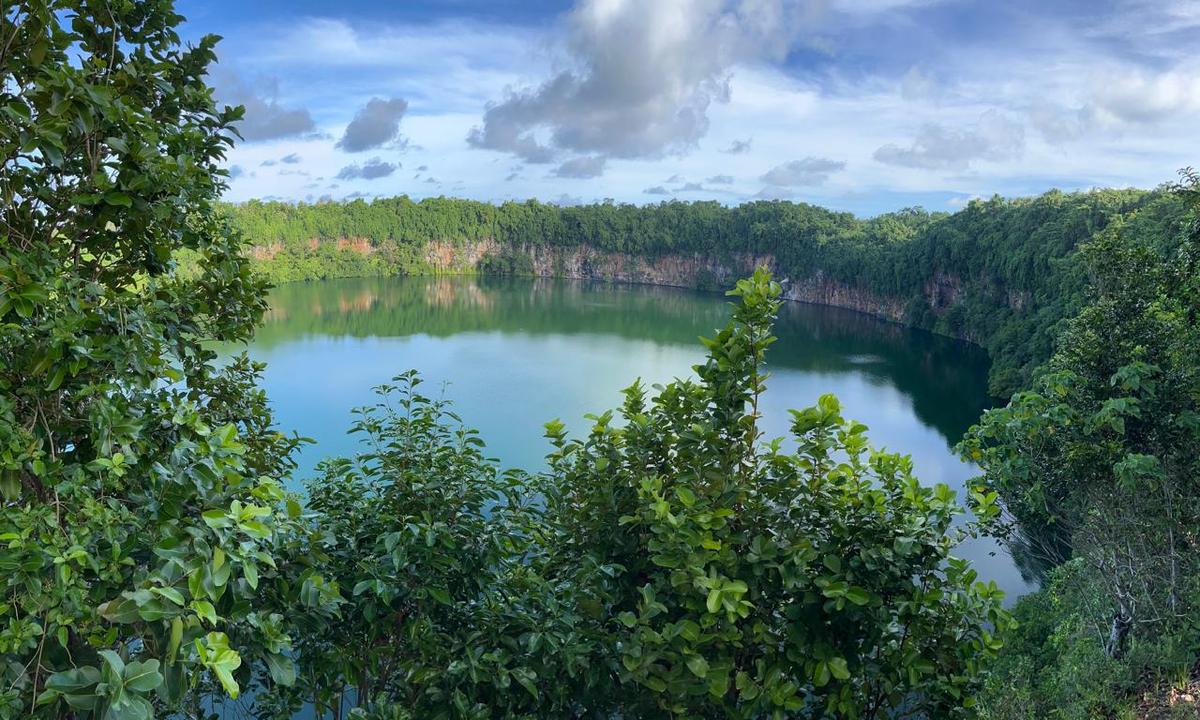
Typically the first attraction that pops up when you search about Wallis and Futuna, Lake Lalolalo, or Lac Lalolalo, offers one of the most mystical and visually stunning inland attractions.
As you walk to the end of the concrete platform at the crater's edge, the view of the perfectly circular crater lake widens before you, plunging at least 80 m (262 ft) deep and stretching 450 m (1,476 ft) across. The ancient volcano emanates an almost supernatural sense of being untouched by time.
The sulphurous depths harbour endemic blind eels that have adapted to this unique freshwater environment over millennia. Surrounding the lake, pristine virgin rainforest creates a natural amphitheatre, while bright white tropicbirds soar around the lake during the day and massive fruit bats soar overhead at twilight.
While its perfectly circular formation can only really be appreciated from the sky, nothing beats the feeling of standing on the edge of what is Wallis and Futuna's most spectacular natural attraction.
For more natural sights like this, check out The Top 10 Natural Wonders in Wallis & Futuna.
RT1, Ahoa, Hahake, east coast of Wallis. The car park is midway between Ahoa and Mala'etoli villages. The best approach is from the south from Mala'etoli. The road is a gravel road for approximately 1 km (0.6 mi), then the road turns to rough dirt road with large holes for the last 300-400 m (330-440 yards) where a 4WD (or going on foot) is recommended.
2.Kolonui Fort (Wallis)
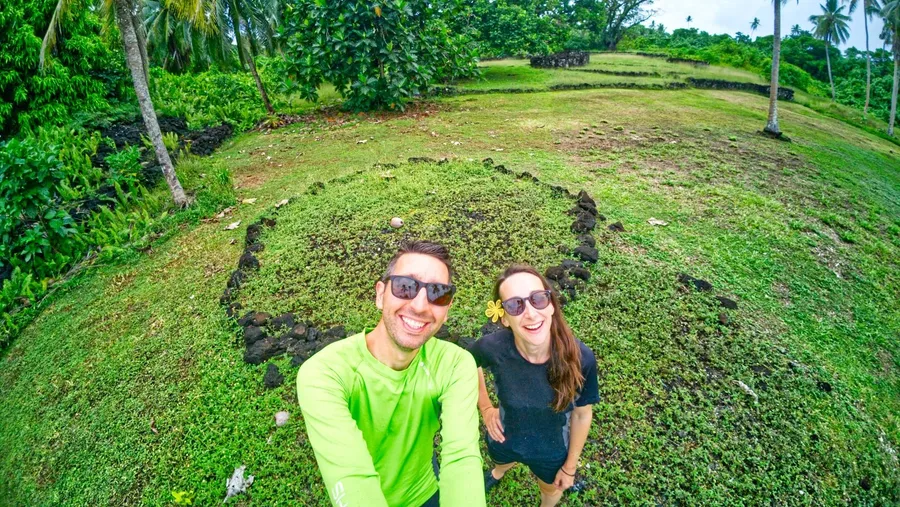
Famous for being the best-preserved example of a Tongan fort in the world, Kolonui Fort at La Résidence de Taleitumu is as intriguing as it is rare.
This remarkably well-maintained historical site was built around 1450 during the expansion of the Tu'i Tonga Empire and served as the last holdout of the Tongans on Uvea until their eventual defeat. The entire fortress is surrounded by impressive defensive walls constructed from black basalt stone, featuring several strategic entrances that once controlled access to this sacred stronghold.
Inside the fort, you'll discover preserved foundations set amongst manicured lawns, leading up to an elevated platform called Talietumu, a marae or sacred place of circular prolonged shape built upon a circular stockade base.
For more historical sites to scout out, check out the 10 Best Historical Sites in Wallis & Futuna.
Halalo, Mu'a, southern district of Wallis. Signposts from the main road (RT 1) lead to an inland dirt road near the Mala'efo'ou Cemetery. Although the road is a dirt road, it is flat and suitable for most vehicles with care.
3.Poï Basilica (Futuna)
-BI%20CREDIT%20WallisandFutunaPocketGuide.com-900x601.webp?v=2026-04-07T01%3A10%3A55.485Z)
For Catholics in the South Pacific, Poï Basilica is certainly famous as a significant pilgrimage site for being the place where Saint Pierre Chanel died for his faith.
You'll discover three main attractions here: the impressive main Basilica, the unique hexagonal Saint Pierre Chanel Chapel, and the fascinating Museum of Saint Pierre Chanel. There's even the grave of the person who killed Saint Pierre (and locals actually encourage visitors to stomp on it).
The museum is split into three engaging sections that take you through Saint Pierre's remarkable journey. You'll find traditional artefacts, precious relics from the saint's life, and touching donations from pilgrims who've made the journey here over the years.
A timeline along the wall traces Saint Pierre's life from his early days right up to the museum's opening in 2021. But it's not just about the saint; you'll also discover ancient pottery and fascinating archaeological finds, including a clay sculpture of a turtle that's the oldest relic ever found on Futuna.
Every year on 28 April, the anniversary of Saint Pierre's martyrdom, the basilica transforms into the epicentre of vibrant celebrations honouring the patron saint of Oceania.
On any other day, you can explore the beautifully maintained grounds and learn about the fascinating history of Catholic evangelisation in Polynesia.
Poï, Alo, northeast coast of Futuna.
4.Fai'umu O Pāpā (Futuna)
-SEB%20CREDIT%20WallisandFutunaPocketGuide.com-900x601.webp?v=2026-04-07T01%3A11%3A13.593Z)
The South Pacific is renowned for its history of cannibalism and one of the best historical examples you can visit today is Fai'umu O Pāpā, also known as the "Cannibal Oven of Pāpā".
You'll find this archaeological site absolutely fascinating, centred around a massive circular stone umu (a traditional earth oven) marking where the ancient village of Asoa once thrived. What makes this place truly captivating isn't just the impressively preserved stonework, but the chilling legend that locals still whisper about today.
According to locals, a rival clan hatched a deadly plot to overthrow the village chief, the Tui Asoa.
The story goes that they murdered the food servant of Pāpā, a legendary warrior who protected the village, then cooked and served the body to him in this very umu. When Pāpā complimented the exceptional taste (not knowing what he was eating), the clan saw their chance and continued their gruesome plan.
They systematically eliminated the chief's entire clan until only a grandmother and three children remained. The children managed a dramatic escape to Loka, where legend says they transformed into dolphins.
For more Futuna finds, check out the 15 Best Things to Do on Futuna.
Asoa, Alo, Futuna. From the crossroads just south of Croix de Sacré Coeur de Jésus, head east approximately 500 m (550 yards). The Cannibal site is on the left.

Editor's Choice
FugaUvea Rental & Accommodation
Explore Wallis at a more natural pace with our simple and affordable bicycle rental. Perfect for leisurely rides along coastal roads or discovering hidden corners of the islands, we provide...
5.Mata'Utu (Wallis)
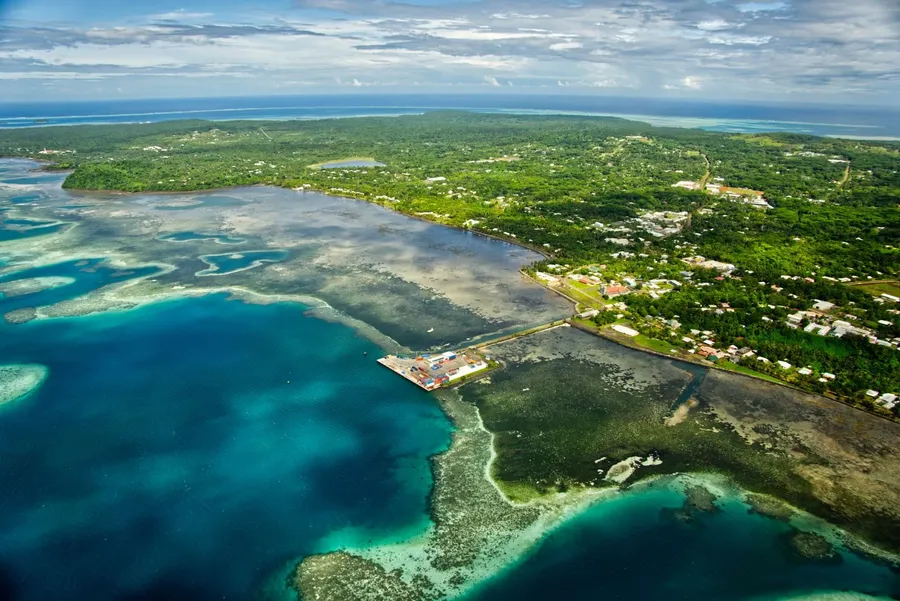
The capital, administrative centre and largest city of the French overseas collectivity, Mata'Utu can certainly be considered a "famous" place in Wallis and Futuna.
Located on the east coast of Wallis (known locally as Uvea), Mata'Utu is famous for its magnificent cathedral. This charming town serves double duty as both the capital of the entire territory and the traditional seat of the Kingdom of Uvea.
While Wallis and Futuna is divided into three traditional kingdoms (Uvea, Sigave and Alo) spread across two separate island groups, Mata'Utu on Wallis Island functions as the central hub for the entire collectivity. Think of it as the beating heart of this remote Pacific paradise.
You'll find the town has everything you need for a comfortable stay, from cosy hotels to exciting tours out to the outer motu (islets). The local restaurants serve up delicious island fare, and there's even a fascinating museum where you can dive deeper into the region's World War Two history.
For the complete picture of what this remarkable destination has to offer, check out our Complete Travel Guide to Wallis.
6.Loka Cave (Futuna)
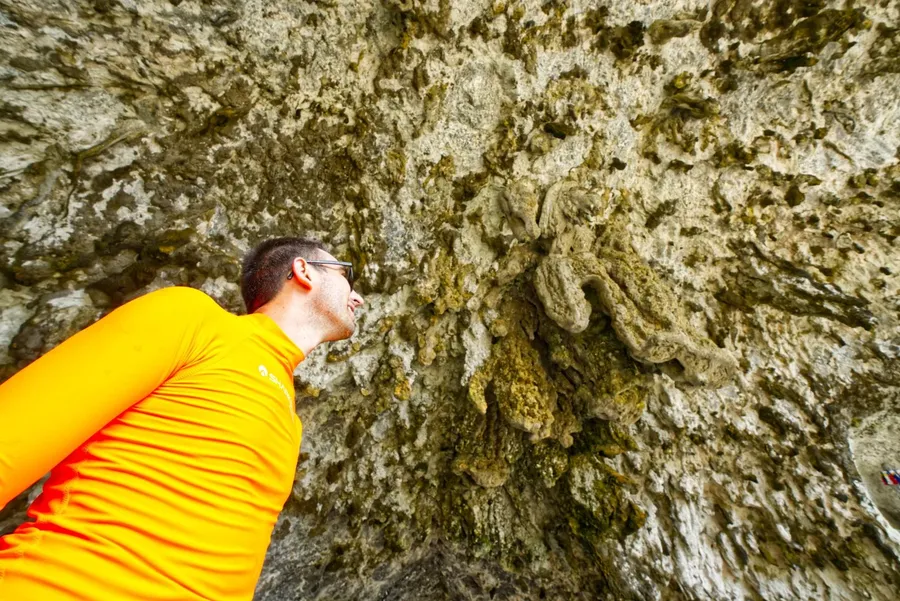
On the third-largest island of Wallis and Futuna, Alofi, Loka Cave is a famous pilgrimage and holy water site (if not a tad overrated for those more interested in natural sites than religion).
To get to Loka Cave, you'll embark on a 4 to 5-hour return hike following ancient pathways laid by forefathers, leading to breathtaking beach accesses, fascinating archaeological sites and the legendary Loka Cave.
Your first stop in the Loka area is Loka Beach with traditional fales. According to local tradition, this is where three children transformed into dolphins while fleeing persecution, making it Futuna's premier dolphin-watching location and a place of deep cultural significance.
Follow the trail at the north end of the beach along the bottom of the cliffs with rope walkways and concrete steps to find Loka Cave itself, a pilgrimage site with a concrete pool containing drinking water and another pool with holy water.
The cave beach offers excellent shore fishing at low tide, while nearby, toward the southern end of Loka Beach, you'll find a natural coral pool best explored when the waters are calm.
The 15 km (9 mi) trail is easy to follow, with the easiest being the stone-walled inland forest trail with a few signposts along the way.
To make a loop, come back via Ganiu Beach (signposted). We recommend starting early and bringing your own food and water for this rewarding expedition.
For more ways to spend your time in Alofi, check out A Self-Guided Day Trip on Alofi: One Day Itinerary.
Northeast coast of Alofi. The start of the trail is accessible from Alofitai Beach, which in turn is accessible by boat from Vele Boat Landing, Vele, the northeast coast of Futuna. Trails are well formed behind the ceremonial fales or along the coast at the eastern end of the beach.
7.Mt Puke (Futuna)
-900x675.webp?v=2026-04-11T20%3A31%3A31.633Z)
Standing at 524 m (1,719 ft), Mt Puke is famous for being the highest peak in Wallis and Futuna.
This challenging 5-6-hour return trail demands experienced hiking skills as you navigate through dense tropical jungle in northern Futuna, but the effort pays dividends with jaw-dropping panoramic views stretching across both land and seascapes. The ascent tests your endurance whilst immersing you in pristine rainforest, complete with native flora and the sounds of tropical birdlife.
At the summit, you'll be rewarded with breathtaking 360-degree vistas that showcase Futuna's dramatic coastline, neighbouring islands and the endless Pacific Ocean beyond.
The trail is not signposted, so it's recommended to go with a guide. Ask your accommodation host to arrange a guide, or guides can be arranged with Mataga Me'a o Futuna Eco Tourisme.
Northern Futuna, accessed via hiking/dirt trails from the villages of Tutafa on the northeast coast and Taoa on the south coast.
8.Anakele (Futuna)
-CUWL%20CREDIT%20WallisandFutunaPocketGuide.com-900x601.webp?v=2026-04-07T00%3A55%3A11.947Z)
Wallis and Futuna are famous for their three different kingdoms among such small islands, so visiting Anakele, the tomb of the first king of Alo, is a good place to begin the kingdom exploration.
This isn't just any old historical site; it's the final resting place of King Fakavelikele and where the current Tui'Agaifo dynasty of Alo began their reign. According to locals, ancient power struggles that shaped Futuna's entire destiny once played out right here.
The site is well signposted alongside the main road, though it's not the cross under the fale that we first mistook it for. Take the short uphill trail to the left of the cross to climb to the top where the real ancient tomb lies. From the road, you'll see how the tomb sits on top of stone terraces placed into the hill.
Speaking of pyramid-style structures, the fabulous natural Pyramid Point (Pointe de Pyramisdes) are within view of Anakele, making this the perfect stop for a dose of cultural significance with jaw-dropping natural beauty.
RT 1, Fikavi, Alo, northern coast of Futuna. On the roadside approximately 750 m (820 yards) northwest of Fikavi village (and the Fikavi Tikis).
Where to Stay
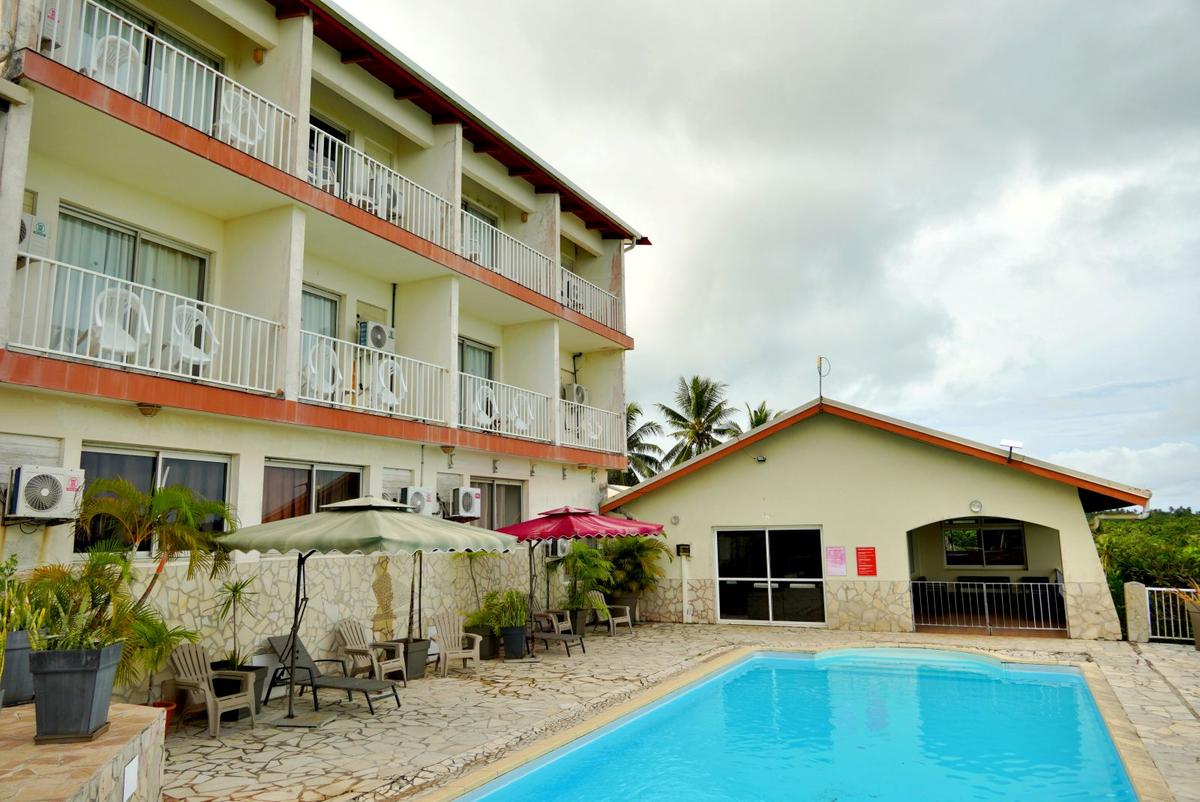
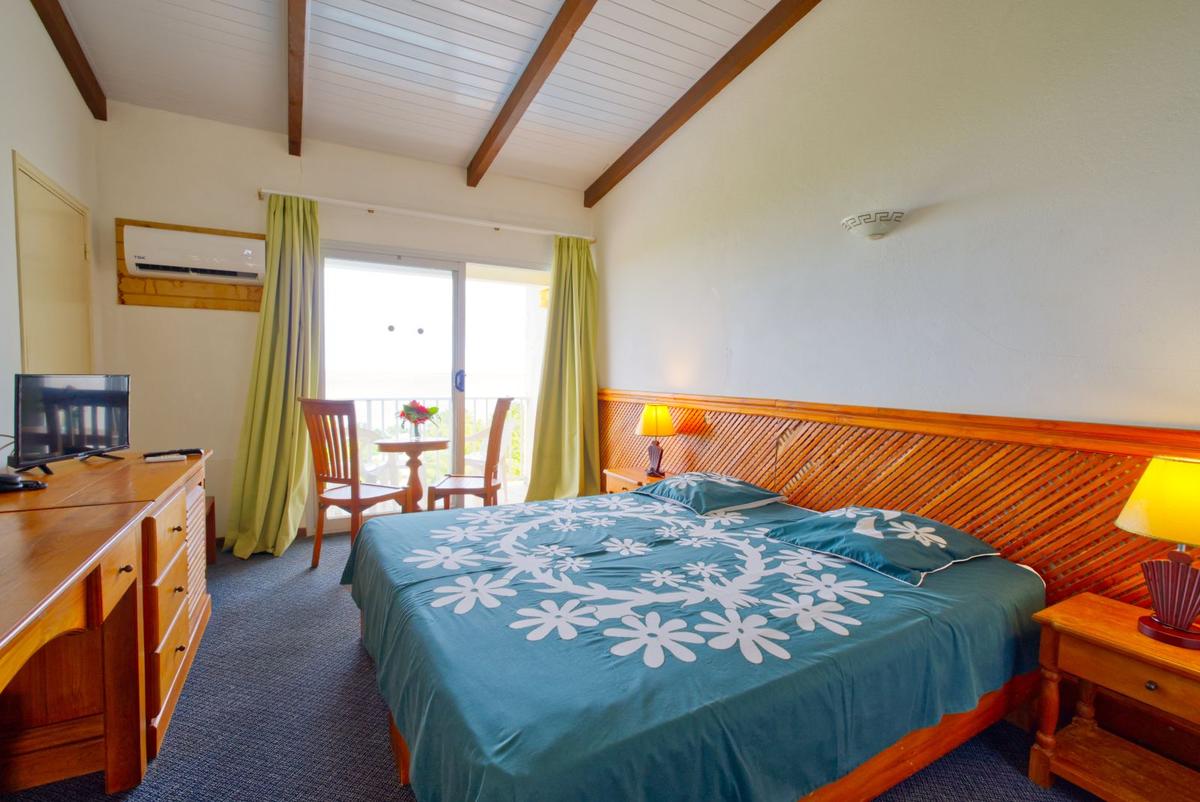
Hotel Lomipeau
Standard Room · Premium Room
NZ$270/night
9.Sakumani (Futuna)
-%20BNCC%20CREDIT%20WallisandFutunaPocketGuide.com-900x601.webp?v=2026-04-07T00%3A51%3A58.580Z)
And for the first king of Sigave, the northern kingdom of Futuna, Sakumani is the tomb site to scout out.
Dating back to the 19th century, around the time missionary Pierre Chanel arrived on the island, this roadside memorial signifies the story of how organised leadership came to this remote Pacific territory.
Before Sakumani's reign, Sigave was ruled by the law of the strongest, with clans constantly fighting for dominance. Chosen by the clans themselves to bring peace and structure, Sakumani established the kingdom system still used today, creating Futuna's first council of chiefs and designating customary leaders and ministers.
Today, you can admire the stone slabs from the roadside in a grassy clearing that villagers maintain.
RT 1, Tavai, Sigave, northeast coast of Futuna. Visible from the roadside when travelling through Tavai village.
10.Royal Palace (Wallis)
-SEB%20CREDIT%20WallisandFutunaPocketGuide.com-900x601.webp?v=2026-04-07T00%3A35%3A37.756Z)
Finally, for a slice of kingdom life on Wallis, the most famous royal site is the Royal Palace itself, serving as the official seat of the Lavelua, the customary king of Uvea.
Built in 1876, this historically significant structure is where the most important political and traditional ceremonies of Wallis and Futuna take place.
Positioned directly beside the impressive Notre-Dame-de-l'Assomption Cathedral, the palace presents a striking sight with French and Wallisian flags fluttering proudly out front. The grassy area before the palace remains cordoned off for most of the year, allowing visitors to photograph the cross and flags from a respectful distance.
The palace truly comes alive during special celebrations such as the territorial feast day, the 14 July Bastille Day ceremony and traditional katoaga ceremonies. During these important events, the island's top authorities, from chiefs to bishops, gather ceremonially in front of the royal palace.
Mata'Utu, Hahake, east coast of Wallis. Located next to Notre-Dame-de-l'Assomption Cathedral on the waterfront road.
More Famous Places in Wallis and Futuna
Now that you know some of the most famous places in Wallis and Futuna, discover more of the top sights in Wallis and Futuna listed in the guides below:
- The Top 10 Natural Wonders in Wallis and Futuna
- Sightseeing in Wallis & Futuna: Top 10 Sights in Wallis & Futuna
- 10 Best Sightseeing Tours in Wallis & Futuna
Finally, add more to the bucket list using the 101 Best Things to Do in Wallis and Futuna: The Ultimate List. Plus, work out all the logistics of planning a Wallis and Futuna getaway in The Best Wallis and Futuna Travel Guide.

-U%20CREDIT%20WallisandFutunaPocketGuide.com-900x507.webp?v=2026-04-07T00%3A41%3A45.444Z)